
For this sauna wood, materials & quality guide, the useful answer is practical: what makes the setup safe, comfortable, easy to maintain, and worth using when the novelty wears off.
A friend of mine in Bend, Oregon, spent two weekends last October assembling a pre-cut redwood barrel sauna on a gravel pad behind his garage. He’d budgeted $4,200 for the kit. By the time he’d paid for the pad prep, the 240V run from his main panel, and a city electrical permit he didn’t know he needed, he was closer to $7,000. He loves the thing. Uses it four nights a week. But when I asked him what he’d do differently, he didn’t hesitate: “I would have budgeted for the whole project, not just the box.”
That’s the central tension of any redwood sauna build. The wood gets all the attention (understandably, it’s gorgeous), but the pad, the wiring, and the climate planning are where projects succeed or stall. This guide covers the wood choice itself, what the research actually says about sauna use, installation realities, and all-in costs.
Why Redwood, and How It Stacks Up Against Cedar
Western red cedar has been the default sauna wood for decades, and for good reason: natural rot resistance, low resin content, and that warm, slightly sweet scent that fills the cabin the moment the heater kicks in. Clear-grade redwood is the quieter alternative. It’s denser in color, ages into a richer tone over the years, and handles heat and moisture well. The catch is supply. Old-growth redwood harvesting is heavily restricted, second-growth stock has tightened, and prices have climbed accordingly. Expect to pay a 15% to 30% premium over comparable-grade cedar for all-heart redwood.
A few practical differences worth knowing:
- Softness. Redwood is slightly softer than cedar. It’s more comfortable underfoot on a bench but scratches a bit easier during assembly. Handle boards carefully.
- Resin. Both species are low-resin, which matters because high-resin woods (like pine or spruce that hasn’t been thermally treated) will bleed sticky sap onto your skin at sauna temperatures. Nobody wants that.
- Lifespan. Tight-grain heartwood redwood, with light annual oiling on the exterior, will hold up 15 to 25 years outdoors. Cedar is comparable. Thermo-aspen and thermo-spruce are gaining ground as alternatives but don’t carry the same track record yet.
- Joinery. On any sauna build, you want tongue-and-groove cladding regardless of species. Cheap kits skip this and use butt joints with felt strips. Those builds leak heat at the seams and look visibly tired within two seasons.
If you’re comparing redwood against other species in detail, this sauna wood, materials & quality guide breaks down sizing, grain, heater wattage, and material considerations side by side. Worth bookmarking before you commit to a kit.
See also: The Future of Law Powered by Technology
What the Sauna Research Actually Shows
The study that gets cited most often in sauna conversations is the Laukkanen 2015 cohort, published in JAMA Internal Medicine. The team followed 2,315 middle-aged Finnish men over 20 years and found a dose-response relationship between sauna frequency and reduced cardiovascular mortality. Men who used a sauna four to seven times per week had roughly half the cardiovascular mortality rate of those who went once a week. That’s a striking number, though it comes with the obvious caveat that Finnish men who sauna daily are probably different in other lifestyle ways from those who don’t.
A 2018 follow-up from the same research group, published in BMC Medicine, reported lower dementia incidence at the highest sauna frequencies. The proposed mechanisms include heat acclimation, improved endothelial function, and a heart-rate response that looks physiologically similar to moderate-intensity exercise. Basically, sitting in a 180°F room makes your cardiovascular system do real work, even though you’re just sitting there. It’s like a treadmill that smells like cedar (or redwood, if you went that route).
For practical home use, 20-minute sessions at 170°F to 195°F, two to four times per week, is a reasonable starting protocol. Hydrate before and after. Step out if you feel lightheaded. This isn’t the place for toughness contests.
The Install: Pad, Wiring, Ventilation
Here’s where most builds go sideways, not because the work is hard, but because people underestimate the sequencing.
Pad first. Always. A 4-inch compacted gravel pad with a drainage layer handles most barrel saunas on flat ground. For cabin-style builds, especially in wet or freeze-thaw climates, a 4-inch reinforced concrete slab is the better call. Figure $4 to $7 per square foot installed for concrete. A pad that settles after the unit is on top of it becomes a very expensive problem.
Electrical second. A typical traditional sauna heater pulls 4.5 to 9 kW on a dedicated 240V circuit at 30 to 50 amps. This is not optional DIY territory for most homeowners. A licensed electrician should run the circuit, size the breaker correctly, pull the permit, and tie into your main panel. I’ll say it plainly: cutting corners on 240V work is how house fires start. The $600 to $1,800 you spend on a proper electrical run is money well spent.
Ventilation third. An outdoor sauna needs a fresh air intake low on the wall under or near the heater, and an adjustable exhaust vent on the opposite wall near the ceiling. Indoor builds need a passive vent to the outside or a properly sized exhaust fan. Poor ventilation makes a sauna feel stuffy and accelerates wood degradation from trapped moisture.
Permits. Some counties exempt detached structures under 200 square feet from a building permit. The electrical permit for a 240V circuit is almost always required regardless. Call your local building department before you order the kit. Not after.
The carpentry portion of a pre-cut kit? Most adults with a helper and a free weekend can handle it. The rest of the project is where you bring in professionals.
All-In Cost (Not Just the Sticker Price)
The number on the product page is not the number you’ll spend. Here’s what a realistic budget looks like:
Sauna units: Entry barrel kits start around $2,490. Mid-tier cabins with a quality heater run $6,000 to $10,000. Premium builds with panoramic glass or thermo-aspen cladding hit $12,000 to $16,980.
Site work: Gravel pad, $400 to $900. Concrete slab, $1,200 to $2,400. 240V electrical run with permit, $600 to $1,800.
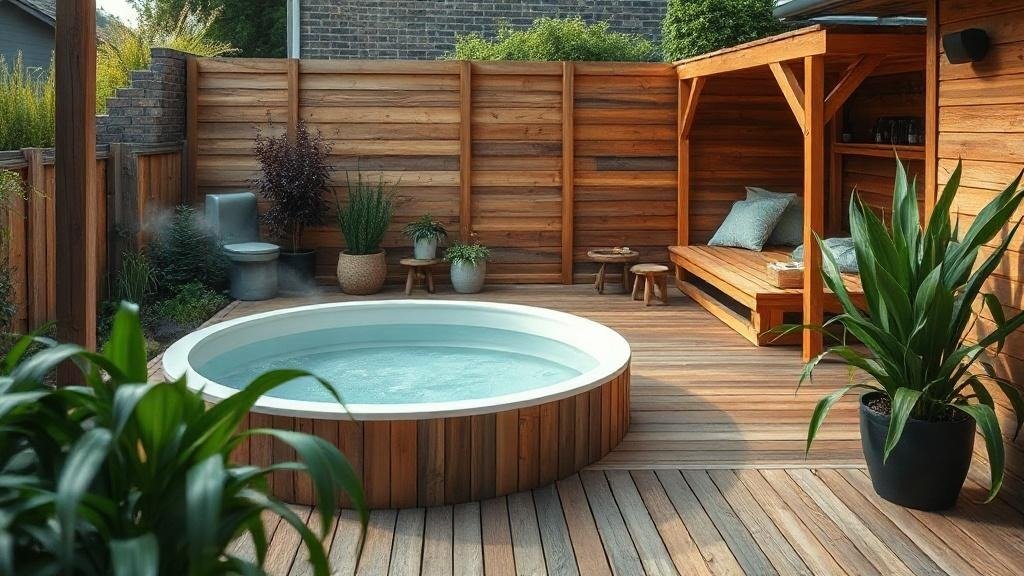
Cold plunge (if you’re building a contrast setup): Residential insulated tubs with integrated chillers run $4,500 to $7,500. Commercial-grade stainless builds with full filtration, $9,000 to $14,000. Stock-tank DIY setups land at $400 to $900 but require manual ice, which gets old fast. A 1/3 HP chiller can hold 50°F in a small insulated tub in a temperate climate, but it’ll struggle in a hot garage in August. Size the chiller to your worst-case ambient temperature, not your best.
Resale value. Appraisers won’t give you dollar-for-dollar credit, but a well-built outdoor wellness setup is increasingly treated as a selling feature in Northeast and Pacific Northwest markets.
HSA/FSA eligibility. A residential sauna is rarely HSA or FSA eligible unless a clinician issues a Letter of Medical Necessity for a documented condition. This is patient-specific and depends on your particular situation. Talk to your tax advisor before assuming a purchase qualifies.
Maintenance Is Boring but Non-Negotiable
Redwood ages beautifully if you actually maintain it. Left alone, it grays and can develop surface checks. The routine isn’t complicated:
Wipe down benches after each session (sweat is mildly acidic and will discolor wood over time). Oil the exterior once a year with a penetrating wood finish rated for outdoor use. Inspect the door hardware and hinges annually, as heat cycling loosens fasteners. On cold plunges, replace filter cartridges every 6 to 12 weeks, keep the ozone or UV sanitation running on schedule, and drain-and-refill per the manufacturer’s interval.
The boring truth is that maintenance is what separates a sauna that looks great at year ten from one that looks rough at year three. It takes maybe 20 minutes a month.
FAQs
Do I need a permit for a redwood sauna?
Some municipalities exempt detached structures under 200 square feet from a building permit. The electrical permit for a 240V circuit is almost always required. Call your local building department before ordering the kit.
How quickly does a redwood sauna heat up?
A 6 kW barrel sauna reaches 170°F in 25 to 35 minutes. A 7.5 kW cabin sauna hits the same temperature in 30 to 45 minutes. A cold-plunge chiller pulls a freshly filled tub from tap temperature to 45°F in 3 to 8 hours depending on chiller size and starting temp.
How long should a typical redwood sauna session last?
Most adults settle between 12 and 20 minutes for a sauna session at 170°F to 195°F, and 2 to 5 minutes for a cold plunge at 40°F to 55°F. Build up gradually if you’re new to either.
Can I install a redwood sauna on a deck?
Some smaller barrel units can sit on reinforced decks if the framing supports the loaded weight (often 600 to 1,200 lb). Most cabin units belong on a pad. Confirm load capacity with a structural engineer or your contractor before placing a unit on existing decking.
How often does a redwood sauna need maintenance?
Wipe down benches after each session and oil the exterior once a year. On cold plunges, replace filter cartridges every 6 to 12 weeks, run sanitation on schedule, and drain-and-refill per the manufacturer’s interval.
Is redwood better than cedar for a sauna?
Neither is objectively “better.” Redwood ages into a deeper color and has a slightly different grain character. Cedar is more widely available and typically less expensive. Both are low-resin, rot-resistant, and well-suited to sauna use. The choice is partly aesthetic, partly budget.
What’s the biggest mistake people make on redwood sauna builds?
Underbudgeting. People price the kit and forget the pad, the electrical, the permit fees, and the first round of accessories (bucket, ladle, thermometer, lighting). Budget for the whole project from the start.
Disclaimer. This article is general consumer information, not medical advice. Heat and cold therapies carry real cardiovascular load. Anyone with arrhythmias, uncontrolled hypertension, Raynaud’s phenomenon, recent cardiac events, or who is pregnant should consult a physician before starting any new sauna or cold-plunge routine.
Any 240V electrical work should be completed by a licensed electrician under the appropriate local permit.
HSA and FSA reimbursement on wellness equipment is patient-specific and depends on a Letter of Medical Necessity from a clinician. Talk to your tax advisor before assuming a purchase qualifies.